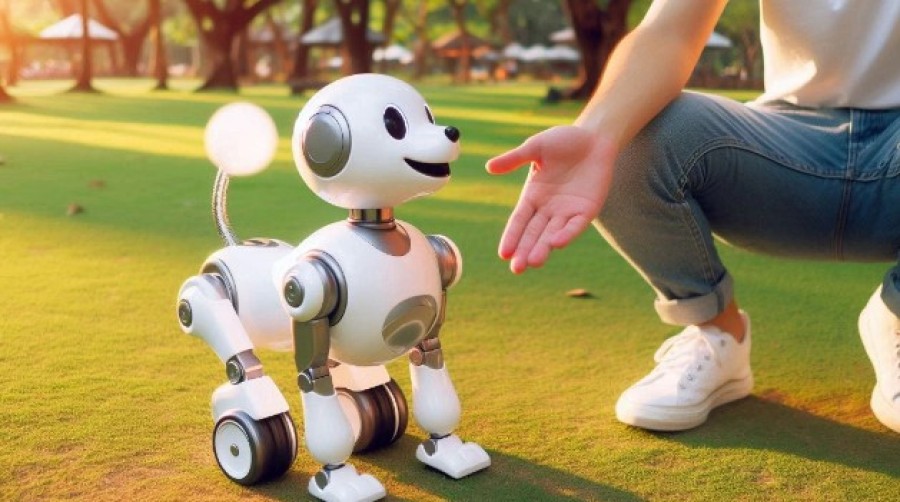

AI is currently being used by researchers to create robot dogs that are more sensitive to and understanding of human emotions. With the use of cutting-edge wearable sensors and edge computing, the initiative seeks to transform therapeutic support and companionship.
Researchers are using artificial intelligence to improve the responsiveness, empathy, and personalization of robotic canines for their human partners. The Institute for Future Technologies (IFT) is funding this initiative, which aims to train these robotic doggos to be more interactive and to recognize and react to the needs and emotions of their owners in order to make them come to life.
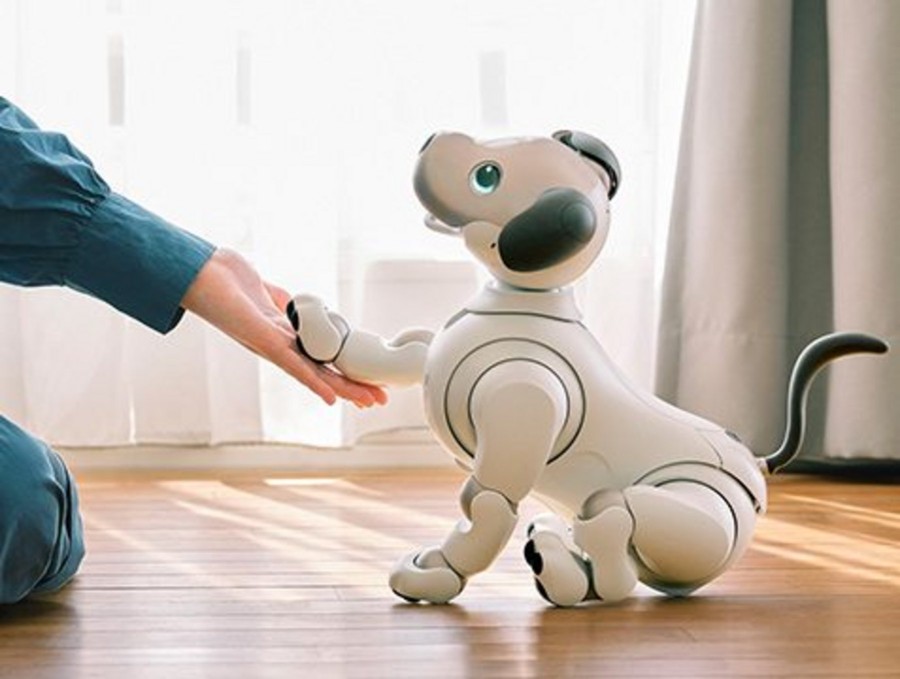
The Institute for Future technology (IFT) provided a seed funding for this project, which is reportedly using cutting-edge edge computing and artificial intelligence (AI) technology to train robot dogs, according to a Science Daily story. According to reports, the main goal of this project is to develop a socially supportive robot dog that can modify its behavior in response to its human partner's emotional and physical states.
This study, headed by New Jersey Institute of Technology (NJIT) Assistant Professor Kasthuri Jayarajah, supposedly expands on the idea of edge intelligence—a hybrid of artificial intelligence (AI) and edge computing that permits real-time data processing on devices with constrained computational resources. The goal of the research is to create a robot dog that can recognize and react to minute human cues, enhancing natural and meaningful interactions. This will be accomplished by incorporating wearable sensor equipment.
Imagine a robotic dog that learns your favorite play pattern and modifies its behavior accordingly, or one that can sense when you're sad and offer consolation. The goal of this project is to integrate wearable technology that can recognize emotional and physiological indicators in order to reach the same level of customization. These sensors, according to experts, can record ephemeral moods like pain or comfort as well as personality qualities like introversion, allowing the robot to adjust how it interacts with people.
Teaching the robot dog to detect and react to human emotions and behaviors is one of the project's main problems. The researchers are investigating the use of multimodal wearable sensors in conjunction with conventional robot sensors, such visual and auditory inputs, to accomplish this personalization. These sensors, which are integrated into commonplace items like headphones, are able to track micro-expressions and brain activity to give the robot dog real-time information on the user's mental state.
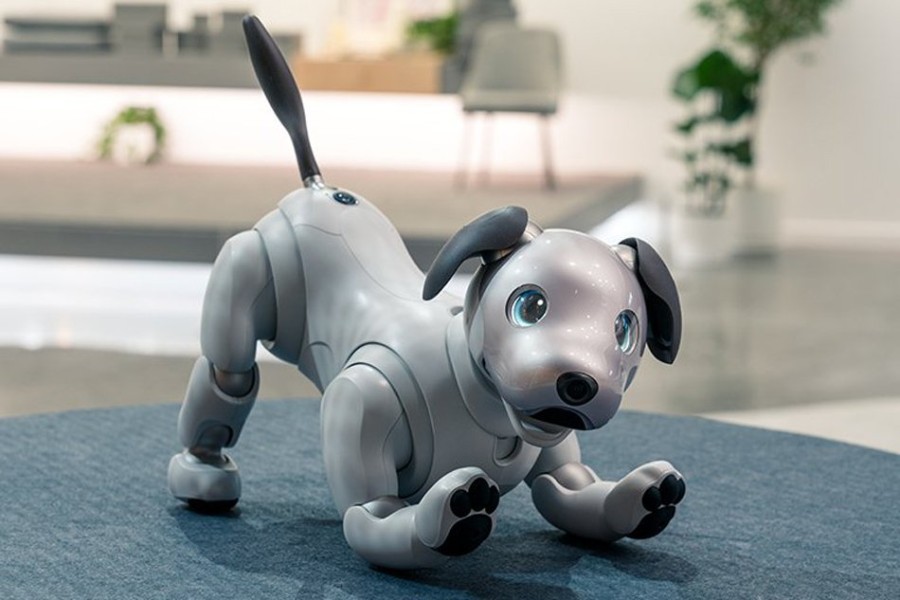
This data will be processed by the AI algorithms under development, allowing the robot dog to decide how to communicate with its human partner. For instance, the robot dog may react with reassuring motions or noises if the wearable sensors identify that the user is experiencing tension or anxiety.
It's interesting to note that this technology has uses beyond only making robot dogs companions for people. The researchers believe that these socially supportive robots could help older people fight loneliness and isolation by offering much-needed support. They could also help those with cognitive or physical problems in therapy and rehabilitation settings.
The first work by Jayarajah focuses on teaching robotic dogs to recognize and react to their owners' gestural cues. It will be presented later this year at the International Conference on Intelligent Robots and Systems (IROS).

© 2026 Bharati News | All Right Reserved